Swimming in the Cenotes of Punta Cana: Three Very Different Things
Updated September 24, 2026 · 7 min read
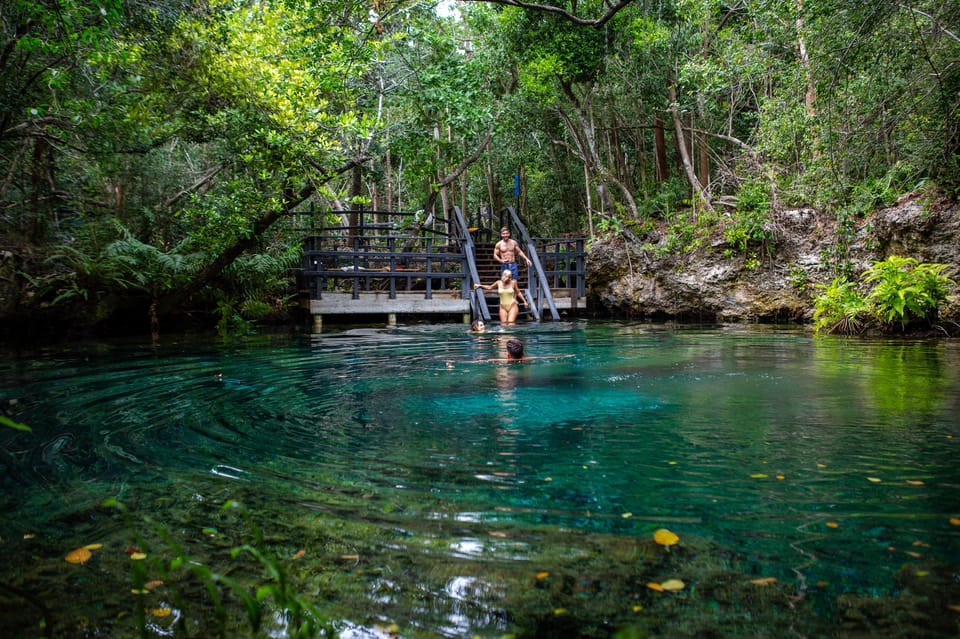
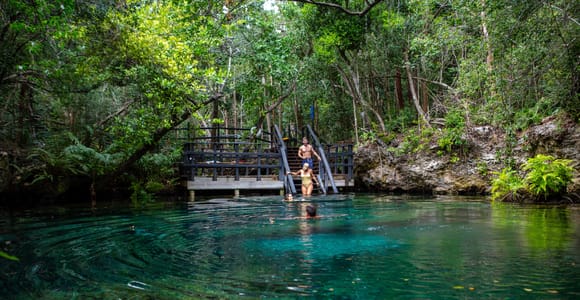
The limestone under this coast is full of holes. Rainwater has been dissolving it for a very long time, caves have formed and their roofs have fallen in, and groundwater has filled what is left. The result is a cenote: cool fresh water in a hole in the rock, often with trees leaning over it.
There are 174 offers on the cenote list for this coast, starting at €7.91 and running to well over a hundred euros. That spread is not a discount ladder. It is three different products wearing the same word.
1. Ojos Indígenas — the nature reserve
Ojos means eyes. The Ojos Indígenas reserve sits inside the grounds of the Puntacana Resort and holds 12 freshwater lagoons fed by the aquifer under the coast. Not all 12 are open to swimmers, and that is the point of the place — the closed ones are left alone.
You do not wander in. Visits are guided, and the walk through the forest is part of what you are paying for: this is a working conservation project as much as a swimming spot, and the guide will talk about the trees and the birds as well as the water.
On price, take the operator’s word over ours. The resort’s own page quotes USD 90 for outside visitors and USD 40 for guests of its two hotels. Reserves like this review their rates; confirm the figure at the time you book. Most packaged visits sold from the hotel zone, including the popular guided swim that also takes in tastings of cacao, coffee and mamajuana, bundle the entry into one price and run about three and a half hours.
The water is fresh and noticeably cooler than the sea. That is the whole appeal in August.
2. Hoyo Azul — the park attraction
Hoyo Azul sits at the foot of a limestone cliff in Cap Cana, reached by a short walk through forest. The water is an intense turquoise, the cliff rises straight out of it, and the photographs you have seen are not exaggerated.
Two things are worth knowing before you plan around it.
First, there is no ticket for Hoyo Azul on its own. It belongs to Scape Park, and you buy admission to the park. If you only want the cenote, you are still paying for the ziplines, the caves and the rest of the site.
Second, life jackets are compulsory and are handed out at the water. There are lifeguards. This is not negotiable and it is not a formality — the pool is deep, and how deep is reported inconsistently enough that we are not going to put a number on it here.
If the rest of the park is what you actually want, that combination sits with the ziplines and horseback rides rather than on the cenote list.
3. The cave stop on a buggy tour — the ten-minute version
The third kind is the one most visitors actually meet, usually without having chosen it. A large share of the buggy and ATV tours include a “cave swim” or a “water cave” between the dirt track and Macao Beach.
This is a genuine cenote, usually reached down a flight of rough steps, often in near-darkness with a couple of lights. It is also a ten-to-twenty-minute stop at the end of a dusty drive, shared with everyone else’s buggy group, and the water is murkier than any photograph on the booking page suggests — because forty people have just got into it covered in dust.
None of that makes it bad. It makes it something other than a morning at Ojos Indígenas, and the price difference tells you so. What a buggy tour is really like covers the rest of that day.
What every one of them will ask you
The same request comes up at all of them, and it is the one instruction worth following to the letter: go in without sunscreen, or wear only a reef-safe or fully biodegradable one.
These are closed bodies of fresh water with fish and other life in them and no tide to flush anything away. Conventional sunscreen does not disperse; it films across the surface of a lagoon that is the same water this morning as it was last night. Where the rule is enforced, you will be asked to rinse first. Where it is not, it still matters.
Related, and less obvious: no shampoo, no soap, no insect repellent going in. Put the repellent on afterwards, because the mosquitoes in the forest are real.
Choosing between them
- Half a day, and the nature is the point — Ojos Indígenas. Guided, calm, and the only one of the three where somebody explains what you are looking at.
- A full day, travelling with teenagers, want a park — Scape Park and Hoyo Azul. The cenote is the highlight; the ziplines are the reason you stay until the afternoon.
- You have already booked a buggy tour — you are getting a cenote anyway. Take a second look at whether you need another one.
- You have one free morning and small children — freshwater lagoons with steep wooden steps and life-jacket rules are not automatically the easy option. Punta Cana with kids goes through what that actually looks like.
Practical
Take a towel that is not the hotel’s, shoes you can walk a forest path in, and a dry bag. Phones and cenotes have a poor record together, and the platforms are wet and worn smooth.
Go early. Cenote water is at its clearest before the day’s groups have been through it, and at Hoyo Azul the light gets into the pool properly only for part of the day.
And do not plan a cenote morning and a boat day for the same date. Both involve an early pickup and neither is a short outing — what to see in Punta Cana sets out how many of these long days a week can realistically hold.