Punta Cana with Kids: Which Beach, Which Boat, Which Day to Skip
Updated September 24, 2026 · 7 min read
Most family advice about this coast is interchangeable: sun cream, hats, book ahead. Here is the part that is specific to Punta Cana and actually decides how a week goes.
The reef decides the beach
The central Bávaro coast has a coral reef lying offshore. It takes the swell before the swell arrives, which is why the water there is flat on most mornings and stays shallow for a long way out — you can walk a good distance before it reaches an adult’s waist. For a child who is not yet a confident swimmer, that is the single best feature of this coastline.
Macao is different, and the difference is not cosmetic. It sits outside that reef, facing open Atlantic water. The bottom drops away faster, and on windy days there are genuine waves and a current. It is a superb beach and it is where the surf schools are — but it is not the one to take a five-year-old to on an unfamiliar day. If you do go, the eastern end is the calmer end, and the flag on the lifeguard post is worth reading before anyone goes in. Uvero Alto, further north, behaves more like Macao than like Bávaro.
This is the one piece of local knowledge that transfers to nothing else: on a lot of coastlines the beaches are broadly the same. Here, two of them 30 kilometres apart are not.
The seaweed question
Sargassum — the brown seaweed that drifts in from the open Atlantic — is a real factor in when the water is pleasant to get into. It tends to start arriving around April, is heaviest through the summer, and thins towards the end of the year; October to December is usually the clearest.
Hotels rake the sand every morning. They cannot rake the sea. If clear water matters more to your family than school-holiday dates, this is the thing that should move your booking.
The bus ride is the real constraint
The trips people book here are not short. This is where family plans most often go wrong.
The Saona day trip — the most-booked excursion on the coast — begins with roughly 90 minutes on a coach to the port of Bayahibe, then a boat crossing, then the same again in reverse. Door to door it is 8 to 10 hours, much of it seated, most of it hot. With a toddler, that is a long day for everybody on the bus. With children of eight or ten who like boats, it is one of the best days of the holiday.
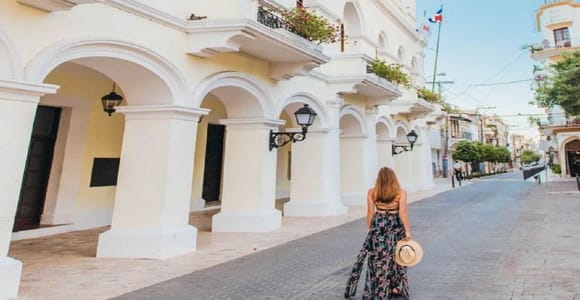
Santo Domingo is worse on that count: around six hours of driving for an afternoon’s walking on cobbles. The Santo Domingo day trip is honest about who that suits, and it is rarely a family with small children.
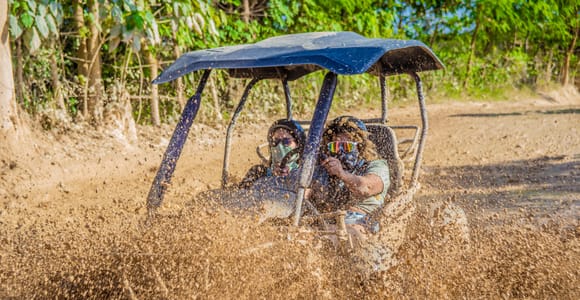
Buggy tours are a firm no below the age operators allow, and often a no above it too. The reason is not the driving, it is the dust: what a buggy tour is really like describes four hours of being coated in fine brown earth, which is funny at fourteen and miserable at six.
What works instead
The short things, close to base.
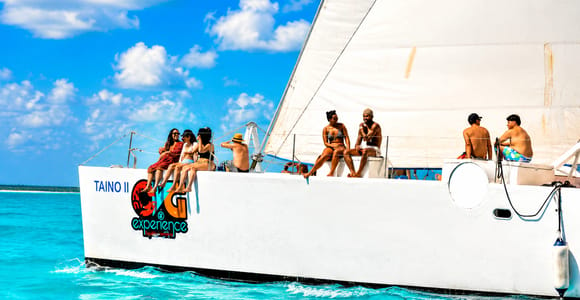
A three-hour catamaran with snorkelling. Long enough to feel like an outing, short enough that nobody melts down on the way home. The family-oriented cruises stop at a shallow natural pool rather than in deep water — the whole snorkelling list and the catamaran trips are the places to compare them.
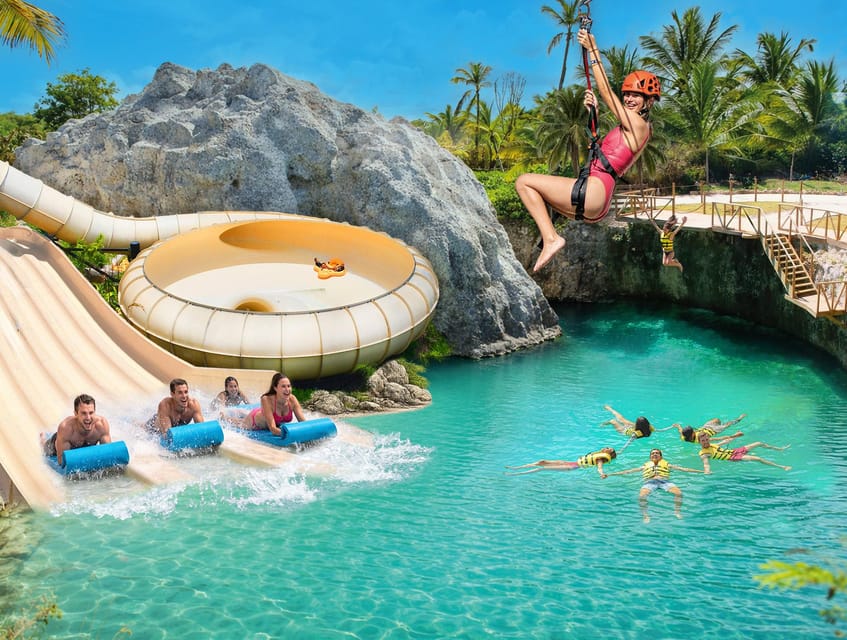
A water park. El Dorado and the Bávaro adventure park both sell day tickets with hotel transfers, and both solve the problem of a day when nobody wants another beach.
Monkeyland. Squirrel monkeys in a fenced hillside forest, usually combined with a plantation visit; it carries 1,607 reviews, which makes it one of the most-booked things on this coast that is not a boat or a buggy. Children who have been promised animals generally come away satisfied.
A cenote — with a caveat. Freshwater lagoons are a wonderful change from salt water, but the access is often a steep wooden stair and the water is cold and deep at the edge. At Hoyo Azul life jackets are compulsory for everyone, which helps. Swimming in the cenotes sets out which version is which.
The full range of shorter, local options is on the things to do page; the long-haul ones are on day trips, where the median price is €112 a head — four of those is a significant part of a holiday budget.
Minimum ages: ask, do not assume
Every operator here sets its own limits, and they are not consistent between two tours that look identical on the page. Boat trips, buggies, ziplines and horse rides all carry them; some are about age, some about height, some about whether an adult rides with the child.
The number is on the booking page of the specific tour, and it is the only place it is reliable. Turning up at a meeting point with a child who is six months under the line means watching the group leave. If a page does not state it, ask before you pay rather than after.
The same applies to anything medical. Seasickness on a crossing, sun, heat — what helps without a pharmacy is a morning departure, a seat mid-boat, eyes on the horizon and far more water than you think. Anything beyond that belongs in a conversation with your pharmacist or your child’s doctor before you travel, not in a travel article.
A week that works
- two short sea trips rather than one long one
- one land day — water park, monkeys or a cenote
- the rest on the reef-protected sand, which is what you came for and what the children will remember
- nothing booked for the first day, because the flight and the transfer have already used it up
And if you have teenagers rather than small children, invert almost all of it: the buggy dust, the Macao waves and the long boat day are exactly the parts they will talk about. What to see in Punta Cana covers the coast as a whole.