Los Haitises from Punta Cana: The Long Day to the Mangroves and the Caves
Updated September 24, 2026 · 7 min read
This is the trip people book when they have already had the beach day and want to see what the island looked like before anyone built a hotel on it. It delivers that. It also takes a full day, most of which is not in the park.
Here is the honest shape of it.
Los Haitises is not in Punta Cana, and not close to it
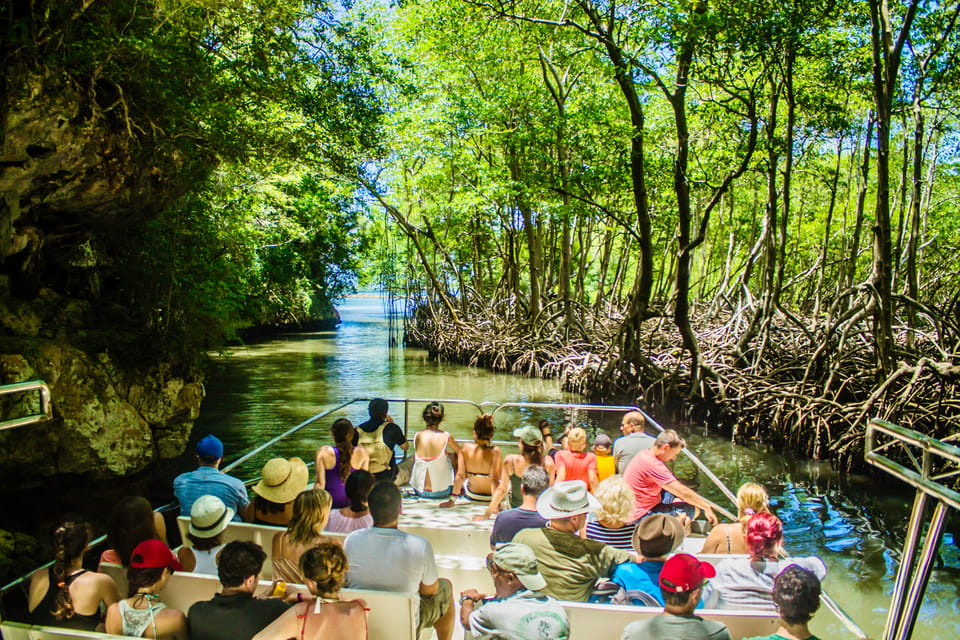
The park sits on the southern shore of Samaná Bay, across the country’s north-eastern corner, in the provinces of Monte Plata, Hato Mayor and Samaná. That is a different part of the Dominican Republic from the one your hotel is in. Day trips from this coast drive inland and north to the small port of Sabana de la Mar, and the park begins where the road ends: you enter it by boat, with a licensed operator, and there is no version of this where you park at a gate and walk in.
Budget the travel honestly. Pickups on the Bávaro and Punta Cana strip start early, the run to the embarkation point is a couple of hours, and the same again comes back at the end. The time on the water is the short part of the day.
What is actually out there
Two things, and they are genuinely unlike anything on your own coast.
The first is the karst. Limestone hills — locally mogotes — stand straight up out of flat water, covered in forest to the waterline, with the boat threading between them. Los Haitises protects one of the largest mangrove forests in the Caribbean, and the red mangrove channels are a nursery: the tangle of roots keeps young fish away from anything big enough to eat them. Bird colonies sit on the cays, and frigatebirds and pelicans are the ones you will actually notice.
The second is the caves. The park has one of the densest concentrations of pre-Columbian rock art in the country. Cueva de la Arena and Cueva San Gabriel are the two that boat tours land at, and the petroglyphs and pictographs on the walls were made by the Taíno long before any European saw this island. They are not roped off behind glass. You walk in and they are at head height, which is remarkable and also the reason guides are strict about hands.
There is a third thing you will probably not see, and it is worth knowing about anyway. Los Haitises is the last natural stronghold of the Ridgway’s hawk (Buteo ridgwayi), a raptor down to fewer than 400 birds worldwide. It was shot for decades because farmers believed it took chickens; the research says reptiles make up as much as 90 per cent of what it eats. Conservation work has the population rising again. If your guide points one out, that is not a routine sighting.
The version sold from Punta Cana has two other stops
Almost nothing from this coast is sold as “Los Haitises” alone. The main one on our day trips list is a three-part day: the park by boat, a swim at the Yanigua waterfall, and the swings on Montaña Redonda above Miches. It runs at €130.88 and rates 4.6 from 566 reviews, which is high for a day of that length.
Understand what you are buying, though. The park is the reason to go. Montaña Redonda is the photograph — a bare hilltop above the Miches coast with swings and seats hung out over the drop, looking across the lagoon towards Samaná Bay. It is genuinely a spectacular view and it is also the part of the day that exists because of social media, which is not a criticism so much as a description.
One practical note about Montaña Redonda: the entrance for going up, and the truck ride if you do not want to walk it, are paid on site and are not inside the tour price. Both are small, both change over the years, and we are not going to put a number on them here. Carry small peso notes and ask the price before you get in, not after.
Who should not book this
Anyone on a short trip who has not yet done Saona. If you have seven nights and one long day in you, the Saona island day is the one most people would keep. It is a beach day; this is a landscape day. They are not substitutes, and doing both inside a week means two early starts and two long drives.
Anyone who gets uncomfortable on open boats. The crossing is in a bay rather than open ocean, so this is not the Atlantic swell you get off Macao, but it is an open boat with a canopy and no way off it for a couple of hours.
Anyone expecting a nature reserve in the European sense. There are no boardwalks, no visitor centre worth the name, and the cave floors are wet limestone. Shoes with grip matter more here than on any other trip sold from this coast.
What to take
Rain gear that packs down, because the weather over the bay makes its own decisions and the boat is open at the sides. A dry bag or a sealed pouch for anything electronic. Grippy shoes for the caves. Small peso notes for Montaña Redonda and for the roadside stops. Insect repellent for the mangrove channels — the same still water that makes the nursery works for mosquitoes too.
Sun protection is the one people forget, because it is a day that feels shaded. Between the boat and the hilltop it is not.
Where it fits against everything else
This is the trip for the second week, or for the traveller who books one big day and wants it to be the one that is not a beach.
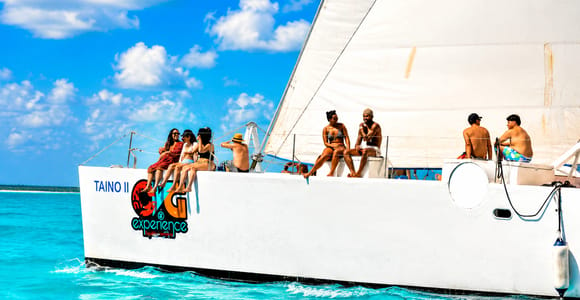
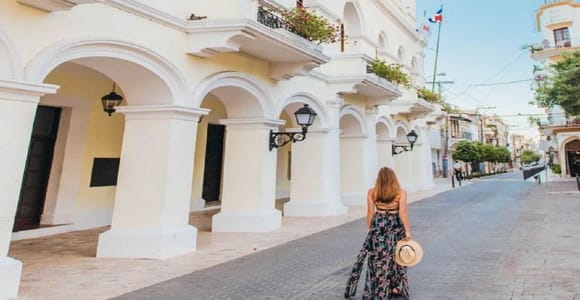
If the appeal is “get out of the resort and see the country” but a day that runs from before sunrise to the evening is too much, the culture tours do that in half the time and start at €3.51 — Higüey is 45 minutes inland rather than three hours north. If the appeal is scenery from the water, the catamaran offers start at €5.27 and get you back for lunch. And if you want the short version of what this coast holds altogether, what to see in Punta Cana lays it out.
Los Haitises is the one that costs you a whole day. It is also the one where what you are looking at — the karst, the mangroves, the marks on the cave walls — is older than any written line about this island.